
Using cards to scaffold learning about Sustainable Development Goals
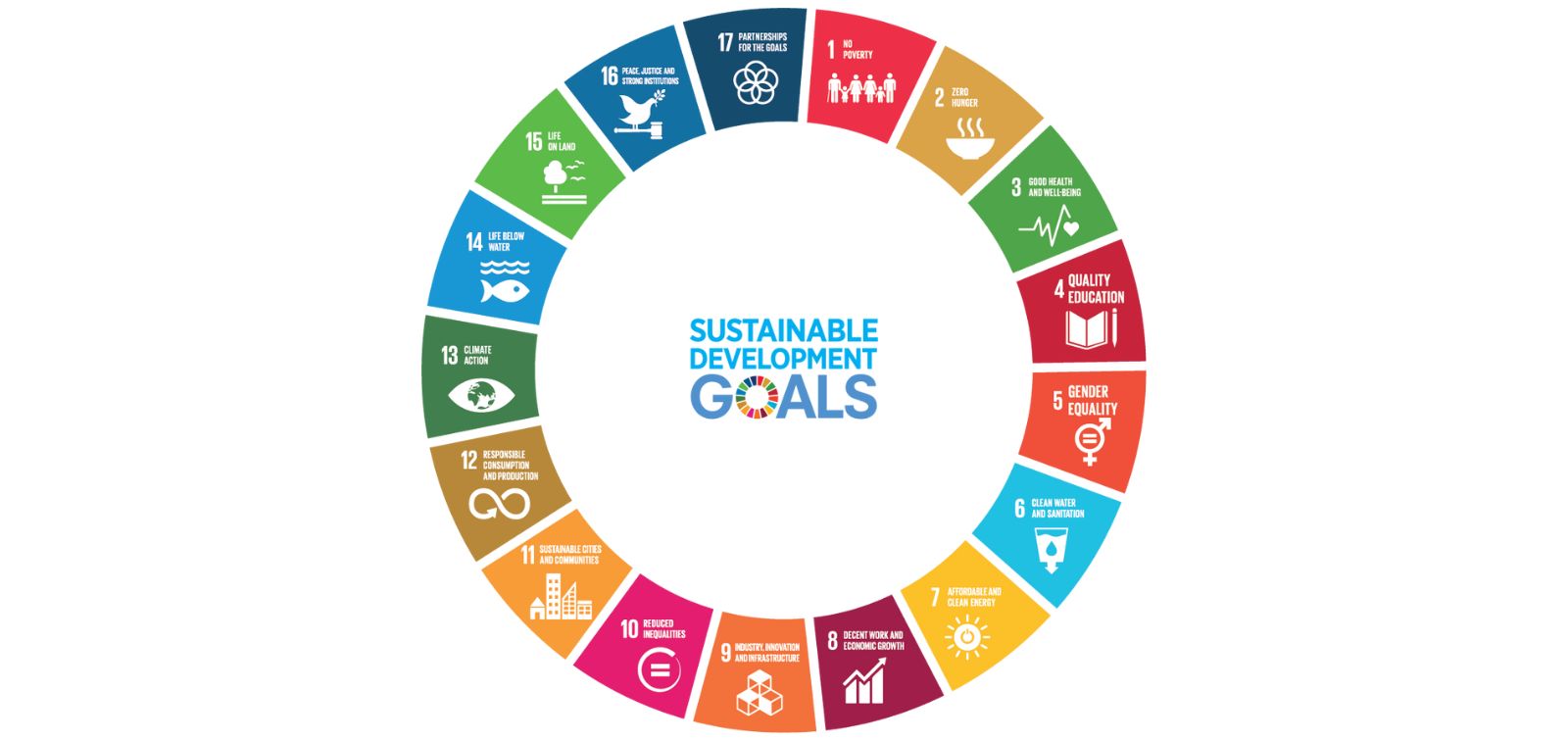
We are sharing this to provide inspiration for embedding sustainability into education practice using packs of cards that staff and students can borrow from Helix. Each of the cards in a pack explains a Sustainable Development Goal (SDG) with examples of how this goal has been advanced.
What did you do? Why did you do it?
We have developed simple learning activities using packs of cards illustrating the Sustainable Development Goals (SDGs). The packs of cards have been created from materials that are available through creative commons licensing on the United Nations website for SDGs.
We printed out information on each of the 17 SDGs onto a separate A5 card. Each card has the icon and number for the SDG, its title and some data on progress globally against the goal up to 2023 in the form of infographics. We created twenty packs of 17 cards.
We have used these cards in three separate activities to support learning about the SDGs.
We first used them in a first-year module in the school of Earth and Environment: Business, Environment and Corporate Responsibility (SOEE1390). Over the past six years or so we have been using SDGs as an entry point for considering how businesses engage with the concept of sustainability and act on it. The SDGs have proved popular with companies and organisations as a way of making sense of sustainability, linking it to their strategies and identifying concrete areas in which they contribute to meeting the goals. Many companies use the SDGs as a mechanism to guide reporting on their sustainability strategies.
One lecture in this module describes the SDGs and includes an example of how a leading company had used them to support their sustainability strategy. The lecture also included some critique of the SDGs, especially in terms of how businesses have used them, and indeed influenced their development.
In the accompanying seminar, groups of students were given a company case study and were asked to consider which SDGs the company might regard as important to their strategy. To help them in this task each group were given a pack of the 17 SDG cards that they could use to explore which, if any might be relevant to the company. They were then asked to rank or prioritise these. This could be in order of significance, or they might consider pyramid ranking or other formations. In the debrief the students were given information about how the company had engaged with the SDGs in their sustainability strategy and reporting and were encouraged to compare their priorities with those of the company.
The second activity was more extensive and involved a full day workshop with adult learners working in business as part of a level 7 apprenticeship in business leadership. In this workshop, an activity with the pack of cards helped the groups to discover and discuss together what the SDGs are, some of the targets and achievements, and think about how the SDGs’ impact on business and vice versa. Rather than a business trying to speak to all the SDGs the aim was to find one or two that the business can impact (in both negative and positive ways) and then develop short-term and long-term actions and indicators to measure achievements.
The third activity involved using the cards to generate ideas for pre-sessional engineering students (students undertaking an English language course prior to starting their degree) to develop ideas for living lab projects. During this session students worked in small groups of four or five, and each group was given two full sets of cards to look through. They were asked to identify one or more goals that might be relevant to their preferred topic, and also as a prompt to think of any problems they might want to investigate solutions for. After this they were provided with information about particular search techniques that they could use to efficiently find relevant background information to help with their assignments, and then they were tasked to use this to find some of the material they could use in their assignments.
What was the impact of your practice and how have you evaluated it?
The University of Leeds has a commitment to embed sustainability into the curriculum, a process led by the Sustainable Curriculum Team. One of the frameworks that we are using to frame the concept of sustainability is the SDGs. The Sustainable Curriculum team is always keen to find new ways of making sustainability meaningful to students.
We have sought to evaluate and learn from this activity through discussion with various stakeholders and based on our own reflections.
The facilitators of the seminars for SOEE1390 had informal discussions with the students after the sessions and picked up concerns about familiarity with the company case studies used. We know from the module feedback survey that students preferred interaction to the lectures on this topic, not least as listing 17 goals can get quite tedious.
Reflections from the apprenticeship workshop participants indicated that the SDG cards and the information about the many targets and achievements had opened their eyes about how broad sustainability is, especially in terms of including issues such as health and gender as sustainability concerns. Some learners reflected that the exercise had made them more confident to focus sustainability on two or three key issues in their organisation whilst others stated that they would begin to look at the SDGs as a way to guide and communicate sustainability in their organisation.
Feedback from the engineering students was generally positive: 22 of the 42 students responded to the feedback survey and of these 21 found the session useful for their assignment and said they had learned something new. The one student who had found the session unhelpful wanted a repeat of the session because they felt the material was covered too quickly for their needs. Given that these students were undertaking an additional pre-sessional course to support their English language, using the SDG visual cards resource was particularly helpful and the course leader expressed interest in developing this further in future iterations of the course,
Overall, the packs of 17 cards are a useful learning aid for the SDGs and have multiple uses with different levels of student and disciplinary contexts. They can be used as basic information to introduce the 17 goals. The information on progress can instigate discussion what can and can’t be measured and the overall relevance of the goals to complex concepts such as sustainability. Or they can be used to help students identify and articulate sustainability challenges that they can go on to investigate.
How could others benefit from this example?
In our examples we used the sets of cards for ranking and prioritisation exercises, as for background information on progress against the SDGs, to inform a critical discussion on the SDGs themselves, and to inspire project ideas on global challenges.
The packs of cards were an effective way for the groups to discover and discuss together what the SDGs are, some of the targets and achievements, and think about how the SDGs’ impact on business and vice versa.
The cards were seen as a useful learning tool as they are tactile and easily handled. The relatively small size (A5) meant that they were suitable for ranking and prioritisation exercises: they were small enough to spread out on a table but were large enough to include background information about the particular SDG.
In each of the examples we felt that students would have benefited from having more time engaging with the information on the SDG cards before embarking on ranking and prioritising them. They could have been introduced to the names and numbers of the SDGs with simple matching exercises, which could be made into a game. Alternatively, the cards could be used as a familiarisation tool so that students can spend some quality time looking at and using these as a prompt for richer more focused discussions.
Another improvement that we identified was related to the contextualisation of the SDGs in business practice. The cohort on first year module is increasingly international and there is a need to broaden the scope of our examples. The team endeavoured to find examples of companies that were reporting publicly on their progress with the SDGs from beyond Europe and North America. We thus added Singaporean based commodity trading company Olam and South Africa’s Woolworth to the company examples but know that we need to include businesses from a greater diversity of cultural contexts. We would also like to instigate a discussion about how relevant the SDGs and ways of measuring them are for different parts of the world. Next academic year we will have 90 minutes for the seminar to allow for more of a debrief and discussion.
Additional Reading List
- The SDG cards that we used were downloaded from the UN SDG website.
- 25 printed A5 sets of the 17 cards are available to borrow from Helix’s booking system. Once you have registered on their Smart Hub system, you can search for the cards under ‘teaching materials’, add to your basket, and follow the instructions for borrowing from here.
Author
Anne Tallontire, [email protected], Laura Smith (both sustainability and business in the school of Earth and Environment), Anika Easy (Skills@Library).
Thanks to teaching fellows Claudia Pollen and Rachel Harcourt who facilitated the seminars for SOEE1390.
Do you have an example of your practice to share?
If you are interested in submitting an article to the TIPS Blog find out how to submit here, or contact the TIPS Editors at [email protected]