
University of Leeds Teaching Awards 2025 Winners
Explore the profiles of our award winners and discover more about the work, innovation and impact recognised in the 2025 University of Leeds Teaching Awards.
 For additional details about the awards, visit our main teaching awards page.
Early Career Excellence Winners
Dr Katie Carpenter
Dr Katie Carpenter – School of History, Faculty of Arts, Humanities and Cultures
 Dr Katie Carpenter is an Associate Professor in Public History in the School of History. She joined the University in 2022 as a Curriculum Redefined Transformative Educator and is currently Programme Director of BA History. Katie’s teaching practice rests on trying new creative methods such as gamification and object-based learning, and on developing authentic assessments that centre on student choice to engender meaningful engagement.
In her School, Katie has been working on developing practice-based and applied history approaches into the BA History programme. This has included designing a new core module, ‘History in Practice’, which will run for the first time in semester two of 2025/26, and a third-year alternative to the traditional dissertation, ‘Public History Project’, which will run for the first time in 2026/27. These elements of the programme were co-created with students in Lego® Serious Play® workshops. The most recent batch of these workshops was supported by a Jinty Nelson Teaching Fellowship from the Royal Historical Society.
Katie is also a member of the Assessment Matters group, which runs under the stewardship of Professor Pam Birtill as institutional assessment lead. This cross-faculty group supports colleagues to implement pedagogically-sound assessment practices through training and the creation of resources. This includes running workshops on assessment briefs and creating the Assessment Matters SharePoint site. In continuation of her work on assessment, Katie was recently appointed as Leeds Institute of Teaching Excellence (LITE) incubator lead for assessment.
Externally, Katie is a member of the History UK Assessment Working Group. She is currently working with a group of colleagues from across the country on an open-access resource that shares best practice in assessing history.
Outside her student education practice, Katie is committed to public engagement and outreach work. Her particular speciality is the history of women in science and the history of science education in the nineteenth and twentieth centuries.
I am really chuffed to pieces to have won a University of Leeds Teaching Award! Since I joined Leeds two and a half years ago, I have immensely enjoyed experimenting with creative teaching methods and new types of authentic assessment. It feels very special to have this work recognised. Thank you to the panel, and to my lovely students for jumping on board when I try something new!
Dr Clare Tweedy
Dr Clare Tweedy – School of Biomedical Sciences, Faculty of Biological Sciences
 Dr Clare Tweedy is a Lecturer and Programme Leader in Neuroscience in the School of Biomedical Sciences. Clare was awarded her PhD from Newcastle University, where she investigated early mechanisms of Lewy body dementia. In 2019, she joined the University of Leeds as a Research Fellow. Her growing interest in student education, developed through supervising lab projects, led her to achieve Associate Fellowship through the University’s PRiSE (Professional Recognition in Student Education) scheme. This inspired Clare’s transition to a Teaching and Scholarship career, becoming a Teaching Fellow in 2021, followed by Lecturer and Programme Leader in 2023. Clare’s teaching excellence has been recognised through multiple Partnership Awards at school and faculty level, including University-level shortlisting for Inspirational Teaching/Supervisor in 2023.
Clare completed the Postgraduate Certificate in Academic Practice (PGCAP) and achieved Fellowship in 2023. Her PGCAP project focused on student belonging within her school, highlighting programme identity as an important factor in large-cohort, cross-disciplinary teaching. Through Curriculum Redefined, Clare has been instrumental in the design of programme-level assessment and enhancement of student belonging.
Since completing the PGCAP, Clare’s passion for active learning has deepened, sharing her practice through the Physiological Society, mentoring colleagues of all levels to embed active learning in their teaching and developing a school-wide flipped classroom framework. Clare has been particularly commended for her redesign of the school’s taught content in year 2. By developing programme-specific modules and assessment, Clare has helped students see the relevance of large, multi-cohort teaching sessions. The programme-specific modules in year 2 cater for over 300 students on overlapping teaching streams, with Clare leading 21 cross-disciplinary academics to deliver diverse pre-work activities and active learning workshops.
In 2025, Clare became co-lead of the Leeds Institute of Teaching Excellence (LITE) Active and Experiential Learning incubator, supporting pedagogical research across the University. Clare co-developed a workshop “300 students walk into a lecture theatre …”, which has been delivered internally and at national conferences, supporting colleagues to adapt active learning to challenges such as large cohort sizes and inflexible settings. Clare has also recently been involved in a cross-school research project on lab-based learning and co-founded the University-wide “Lab-Based Learning Community”, which brings together staff and students from all discipline areas.
Winning this award is a huge honour and personal achievement for me. I’ve been so incredibly lucky to be surrounded by incredible role models, supported by fantastic colleagues, and motivated in all that I do by our excellent students. Up until about five years ago, I was terrified of public speaking – so I never imagined I would be able to stand in front of a room and teach, let alone receive recognition for my efforts! I feel so lucky to do this as a job and share my passion for neuroscience every day. This award means a great deal to me, and I’d like to dedicate it to our brilliant students.
Dr Cuie Xu
Dr Cuie Xu – School of Languages, Cultures and Societies, Faculty of Arts, Humanities and Cultures
 Dr Cuie Xu is a lecturer in Korean at the School of Languages, Cultures and Societies. She obtained her PhD in Korean linguistics from Seoul National University in South Korea in 2020. Her research interests include linguistics, language education, student education and translation. She has also achieved Advance HE Fellowship in recognition of her contribution to student education.
Cuie’s pedagogical practice focuses on enhancing student engagement with their studies. For example, she implemented a year-long longitudinal intervention using a flipped teaching model in teaching Korean, evaluating its effectiveness against the traditional lecturing method through a rigorous experiment. Her flipped teaching design contributed positively to both students’ academic performance and their learning experience. The University of Leeds Teaching Award recognises her excellence in identifying and addressing curricular weaknesses, leading transformational and evidence-based curriculum development, driving sector-wide pedagogical innovation and grounding all interventions in research and evidence.
Cuie’s dedication to student education also helped her achieve a prestigious Leeds Institute for Teaching Excellence (LITE) fellowship. In her LITE study, she took the initiative to tackle absenteeism by investigating the reasons behind students’ non-attendance across the University. The study aims to inform teaching practices, guide policy makers and drive pedagogical development at the University of Leeds, ultimately to increase student engagement with learning.
To support colleagues’ professional development within the wider academic community, Cuie spearheaded the establishment of the British Association for Korean Language Education (BAKLE) to foster a community of practice for Korean educators in UK Higher Education. She currently serves as the first chair of BAKLE. This award also recognises her dedication and leadership in this area.
I am extremely humbled by the University of Leeds Teaching Award. Being recognised as an educator providing transformative and evidence-based education for students is absolutely a true honour. This award motivates me to continue to provide the best teaching quality for my students and further drive pedagogic development within and beyond my sector. Our students deserve the best teaching quality, and what I have done so far is just the beginning of my journey.
Sustained Excellence Winners
Jools E Symons
Jools E Symons – Leeds Institute of Medical Education (LIME), Faculty of Medicine and Health
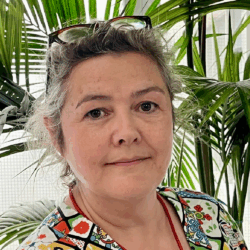 Jools E Symons is a nationally and internationally recognised leader in Patient and Public Involvement (PPI) in healthcare education. With over 23 years of experience in higher education, she has championed the meaningful inclusion of patients, carers and families in medical curricula. Drawing on her own experience as a carer, Jools brings deep empathy and insight to her work, using her lived experience to shape authentic, compassionate approaches to teaching and learning. At the Leeds Institute of Medical Education, she set up and manages the Patient | Carer Community (PCC), a vibrant network of over 200 active members, and leads the Lived Experience Network, an international community of practice for PPI in education and healthcare.
Jools’ award-winning work in student education centres on embedding lived experience into the heart of teaching, learning and assessment. She has pioneered innovative approaches that empower patients and carers as co-educators, curriculum designers and evaluators. Her leadership has influenced both national and international practice, including recent work training educators in Uzbekistan and Kazakhstan on patient-centred communication skills.
She has published widely in journals such as the British Medical Journal, Health Expectations, and Practice Development in Healthcare, and co-authored a chapter in Beyond Reflective Practice and Understanding Medical Education: Evidence, Theory and Practice. Her work continues to shape the future of compassionate, inclusive healthcare education.
Winning this Sustained Excellence Award is a powerful recognition of the voices of the PCC Members, and I dedicate it to them. It affirms that their lived experience is not just valuable—it is essential. This honour strengthens my resolve to keep pushing boundaries and to ensure that partnership working becomes the norm, not the exception.
Catherine Wilkinson
Catherine Wilkinson – Leeds University Business School | Digital Education Service
 Catherine has dedicated the past 20 years to transforming student education. A double alumna of the University of Leeds, Catherine earned her BSc in Computing in 2005 and her BA in Digital Education in 2022. Her long-standing commitment to the University of Leeds is reflected not only in her academic achievements but also in her professional journey, having progressed through a variety of roles within student education. Over the last 18 years, she has established and led a team of learning technologists, which has become the blueprint for Digital Education Enhancement support. Catherine’s leadership of the Learning Technologists team has been instrumental in nurturing talent and enabling colleagues to excel, which she credits as central to her success.
Catherine describes herself as a third-space professional, integrating pedagogical and digital expertise to bridge the gap between academic and professional services, fostering collaboration and innovation. Catherine has led numerous strategic initiatives such as embedding digital capabilities into curricula, co-developing institutional frameworks and supporting the integration of innovative digital education solutions. Her work includes developing technology-enhanced learning spaces, promoting mobile learning, introducing authentic digital skills certifications and advancing GenAI training and curriculum design projects.
At faculty and institutional level, Catherine co-led networks focused on teaching practices, learning technology and learning environments. She also contributed her expertise to national networks as an expert panel member for the Educause Horizon Report.
Her current focus is on embedding AI in the curriculum. She chairs the institutional group on AI Training and Development, which focuses on training provision for all staff and students, and growing the “Talk about Teaching” community in the Leeds University Business School (LUBS).
As a proud alumna, and as I approach my 20-year work anniversary, I am deeply honoured by this recognition. My journey has been shaped by the support of my incredible team, the encouragement of my managers, and the many opportunities provided by LUBS. It has been a privilege to collaborate with the inspiring and dedicated colleagues within the faculty and the broader University community.
Lucy Parkin
Lucy Parkin – Lifelong Learning Centre
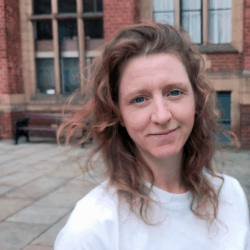 "I dropped out of university in my final year. That experience has stayed with me and shaped everything I’ve done since. My work has been rooted in making learning accessible, inclusive and engaging—particularly for those who may feel like they don’t quite belong. I’m driven not only by learning theory, but by a deep interest in human behaviour, mental health and the ways we can design learning that supports people in a meaningful, lasting way.”
This experience, as Lucy explains, has shaped her approach to learning and professional practice. Much of her career has come down to one thing: people who care finding each other. She has been fortunate to work alongside colleagues who are collaborative, values-led and focused on impact rather than prestige. She is grateful for the opportunity to work with them and proud of what they have created together. That is why this award holds such significance for her.
As a Learning Technologist at the Language Centre, Lucy led several innovative projects embedding digital skills into teaching and assessment. She created pathways and networks to support colleagues, particularly those who felt anxious or isolated in the face of growing digital demands and developed creative projects that helped students apply digital skills in real-world contexts. From website creation to animated peer learning tools, students left not only with new knowledge, but with skills that enhanced their CVs, confidence and future employability.
Lucy’s work spans digital accessibility, inclusive induction design and international staff development. She has introduced microlearning to support accessible teaching, led hackathons that generated cross-institutional collaboration and co-developed a Research Methodologies Hub to support part-time and non-traditional learners. She has also co-authored a published paper on embedding digital skills in language learning and regularly shares best practice at sector conferences.
Lucy holds an MSc in Multimedia and E-Learning and continues to develop her practice through values-led leadership training, EDI-focused learning and reflective practice. She is committed to creating learning experiences that empower both students and staff, and to doing that with care, creativity and purpose.
I feel incredibly honoured to receive this award. It has been a privilege to work alongside so many people who share a genuine passion for what they do and a commitment to making things better for our students and our community. I share this recognition with them. The real reward is knowing the value and impact of the digital innovations we’ve developed together, whether large or small, local or international, personal or collective. I’m grateful for the opportunity this award brings to shine a light on that work. I’m especially thankful to have had the chance to work with the students of Leeds, whose creativity, focus and care continue to inspire and challenge me every day.
Early-Stage Collaborative Excellence Winners
Design and impact of an interdisciplinary module in Food Science and Nutrition (FSN) and English for Academic Purposes (EAP)
Team members:
- Dr Jo Brown – School of Food Science and Nutrition, Faculty of Environment
- Jenna Bodin-Galvez – School of Languages, Cultures and Societies, Faculty of Arts, Humanities and Cultures

L to R: Dr Jo Brown and Jenna Bodin-Galvez
Coming from two distinct disciplinary backgrounds, English for Academic Purposes (EAP) and Food Science and Nutrition (FSN), Jenna and Joanne have worked together co-creating a core cross-curricular module for all FSN postgraduate taught (PGT) students, focusing on academic, research and professional skills.
They have worked to combine their diverse expertise and disciplinary knowledge from EAP and FSN to establish a cohesive and effective cross-curricular module, where students can enhance their skills in both disciplinary areas and apply them to other modules and their future careers. The successful combination of both disciplines has been recognised by students, with the module receiving positive feedback, including the comment that it is an “excellent way to combine the two important segments of a researcher’s life [...] science and language”.
This strong working partnership centres on effective communication and a supportive environment, where they collaborate across disciplines, feel valued and develop professionally by learning from one another. This again was recognised by the students, with one commenting “[the instructors] complement and know how to support each other”. They also have a strong interest in research and are currently conducting a project to explore the impact of this cross-curricular module. The aim is to better understand the role of cross-curricular design and partnership, as well as the embedding of EAP, and to develop a framework for cross-curricular modules that can be shared across the university.
Meet the team:
Jenna Bodin-Galvez has worked at the University of Leeds since 2014 and is a Lecturer in English for Academic Purposes (EAP) in the Language Centre. Since 2018, she has been seconded to the School of Food Science and Nutrition, leading the in-sessional provision and moving it from adjunct to fully integrated, leading to the successful collaboration with Jo. She is also the co-module leader for a content-based summer pre-sessional, Language for Business, which involves collaboration with the Leeds University Business School (LUBS), the School of Design and the School of Music, demonstrating her view on the importance of cross-curricular collaboration. Her scholarship interests lie in the impact of embedded in-sessional provision and the EAP needs of students from an English as a Medium of Instruction (EMI) background.
Dr Jo Brown has worked at the University of Leeds since 2015, starting as a technical staff member. Her career at the University has been centred on bridging the gap between theory-based lectures with practical application, helping students develop essential technical and research skills for their independent projects and future careers. Since becoming a Teaching Fellow at the School of Food Science and Nutrition, Jo has worked closely with Jenna to ensure in-sessional provision supported upcoming programme assessments, marking the beginning of a fruitful working partnership.
In 2024, Jo was awarded an Early Career Excellence University of Leeds Teaching Award for her innovative co-creation work on capstone projects, ensuring staff and students were clearly involved with the development of her Capstone Module. Co-creation and collaboration were central to Jo’s work, and she vowed that her next University of Leeds Teaching Award would be a collaborative award, building on the principles of her previous award. She has achieved this by working with Jenna on a cross-curricular module.
We are absolutely delighted to win an Early-Stage Collaborative Teaching Award. It recognises the importance of cross-curricular partnerships for both academics and students, as well as our successful working relationship. It is a pleasure to work together, and we look forward to continuing this partnership. We hope this recognition encourages others to collaborate across disciplines.
Building Artificial Intelligence Based Education Languages (BAIBEL)
Team members:
- Dr Manoj Ravi – School of Chemical and Process Engineering, Faculty of Engineering and Physical Sciences
- Kashmir Kaur – School of Languages, Cultures and Societies, Faculty of Arts, Humanities and Cultures
- Professor Clare Wright – School of Languages, Cultures and Societies, Faculty of Arts, Humanities and Cultures
- Dr Luisa Cutillo – School of Mathematics, Faculty of Engineering and Physical Sciences
- Dr Matt Bawn – Newcastle University (formerly University of Leeds)

L to R: Dr Matt Bawn, Dr Luisa Cutillo, Dr Manoj Ravi, Kashmir Kaur and Professor Clare Wright
The Building Artificial Intelligence Based Education Languages (BAIBEL) team is an interdisciplinary collaboration that brings together students, academics, higher education professionals and employers to co-create an inclusive, ethical and culturally aware approach to embedding AI in global higher education. The project team spans a wide range of academic and professional domains: mathematics, engineering, digital education, intercultural communication, language studies and biological sciences. This rich collaboration enables the team to approach AI education from multiple angles: technical, ethical, cultural and pedagogical. The team’s diversity ensures that AI is not treated merely as a technological subject but as a phenomenon embedded in society.
BAIBEL empowers learners to not only understand technological tools but to evaluate their implications within a wider societal context. Through a series of design-led workshops, the team has created spaces where students take an active role in shaping the educational narrative around AI. These co-creation activities elevate student voice and ensure that learning pathways reflect diverse cultural experiences and the globalised context of higher education today. In collaboration with the wider staff and student community at Leeds, the BAIBEL team has facilitated the development of an AI literacy framework that has been embedded in modules across different schools and faculties. Students have provided very positive feedback on the framework’s importance for learning about responsible AI use. Furthermore, the work of the BAIBEL team has translated into open access volume publications (pp. 24-27) and conference presentations.
By framing AI literacy within a context of intercultural understanding and social responsibility, the BAIBEL team offers a replicable model for inclusive technology education. Looking ahead, the team plans to refine and share the interdisciplinary framework more broadly, contributing to sector-wide efforts to embed ethical AI education across disciplines. As AI becomes more pervasive in global society, BAIBEL’s emphasis on responsible innovation and cultural awareness will be crucial to preparing students not just to use technology, but to lead with integrity.
Meet the team:
- Dr Manoj Ravi is a Lecturer in Chemical Engineering with pedagogic research interests in authentic assessment, sustainability and the use of artificial intelligence in higher education. His work takes a cross-disciplinary approach, integrating diverse perspectives across all his projects.
- Kashmir Kaur (SFHEA) is Associate Professor of English for Academic Purposes (EAP). Her interdisciplinary pedagogical research spans critical EAP, decoloniality and digital literacies. She explores how power, identity and language shape student experience, with interests in dialogic feedback, linguistic equity and fostering criticality within inclusive and reflective higher education practices.
- Clare Wright is Professor of Linguistics and Language Teaching, focusing on effective and ethical use of digital tools in globalised higher education. Her current research includes building GenAI literacy for future employability and boosting international students’ skills in critical thinking and intercultural communication.
- Dr Luisa Cutillo is Associate Professor in Statistics. Her research spans statistical and machine learning methods, with applications in systems biology and high-dimensional data. She is passionate about interdisciplinary collaboration and is committed to ethical, inclusive practices in both her research and teaching.
- Dr Matt Bawn is a Senior Lecturer in Microbial Genomics at Newcastle University (formerly University of Leeds), specialising in pathogen genomics, antimicrobial resistance and AI-driven analysis of genomic data. He leads teaching in data science and computational biology across undergraduate and postgraduate bioscience programmes and is committed to research-led teaching and advancing digital skills in the life sciences through technology-enhanced learning.
Winning the Early-Stage Collaborative Excellence Teaching Award is a meaningful recognition of what can happen when disciplinary boundaries are crossed, and students are treated as co-creators of knowledge. This award validates our shared belief that AI education must not only teach technical skills but also foster ethical awareness, cultural understanding and a commitment to equity.
Assessment Matters Team
Team members:
- Professor Pam Birtill – School of Psychology, Faculty of Medicine and Health
- Dr Katie Carpenter – School of History, Faculty of Arts, Humanities and Cultures
- Dr Benjamin Chong – School of Electronic and Electrical Engineering, Faculty of Engineering and Physical Sciences
- Dr Sarah Copeland – School of Healthcare, Faculty of Medicine and Health
- Robin Graham – School of Healthcare, Faculty of Medicine and Health
- Dr Rachel Haworth – Student Education Development Team, Organisational Development and Professional Learning (OD&PL)
- Dr Carly O’Neill-Barrett – School of Sociology and Social Policy, Faculty of Social Sciences
- Dr Bethany Robertson – School of Sociology and Social Policy, Faculty of Social Sciences

L to R: Professor Pam Birtill, Dr Katie Carpenter, Dr Benjamin Chong, Dr Sarah Copeland, Robin Graham, Dr Rachel Haworth, Dr Carly O’Neill-Barrett and Dr Bethany Robertson.
The Assessment Matters team, established in June 2023, works collaboratively across the institution to support the delivery of the Institutional Assessment Strategy and the Assessment Design Framework. Using an innovative peer-led approach to enhancement, the team supports high-quality assessment and feedback practices, changing student education practice across the University. The team has designed, delivered and supported a range of activities, including implementing assessment briefs across the University; providing training for writing and reviewing competence standards in Leeds programme specifications; sharing assessment and feedback practice through workshops and conferences; and developing resources available on the Assessment Matters SharePoint site.
The team works to enhance assessment and feedback practices for the benefit of students, seeking to develop approaches and support colleagues across the institution, often through initiatives that are outside usual workload models. A set of shared core values informs the team’s way of working: parity of opportunity for all members; equity in how members’ expertise is recognised and valued; and flexibility of input in response to individual workloads. This has enabled the creation of a non-hierarchical way of working where individual expertise can be brought to bear to solve challenges, enhance approaches and develop lasting impact on student education around assessment and feedback experiences. The team is innovative in its focus on mutual development, which is central to how members work together. This means that the lasting impact on and change in assessment and feedback practices at Leeds begins with the team members.
We are thrilled to have won the Early-Stage Collaborative Teaching Award and to be recognised for the contribution we are making to enhancing assessment and feedback at Leeds. Our work is already having a significant impact on the student experience of assessment and feedback at our institution. This award will enable us to continue supporting all the excellent work colleagues are doing in this area, in a way that makes it easier to share practice and make positive changes to our assessment and feedback culture. We would like to take this opportunity to thank all the colleagues who have worked with us to make these changes. Going forward, this award will further inspire us to continue developing our own assessment and feedback practice, supporting one another in this journey, and collaborating with colleagues – all for the benefit of our students.
Sustained Collaborative Excellence Winners
Postgraduate Certificate in Academic Practice (PGCAP) Team
Team members:
- Victoria Taylor and Dr Kate Richardson – Organisational Development and Professional Learning (A full list of the PGCAP Team is available at the end of this section).
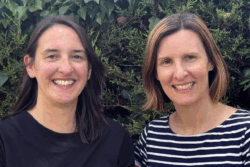
L to R: Victoria Taylor, Dr Kate Richardson
The AdvanceHE-accredited Postgraduate Certificate in Academic Practice (PGCAP) is a professional development course for University of Leeds staff to enhance their student education practice. It is aimed at those in academic or professional services roles that involve a substantial teaching element.
The core team, comprising Victoria Taylor (Programme/Module 1/Module 2 Lead) and Kate Richardson (Module 3 Lead), has built multifaceted delivery collaborations extending across the breadth of the University to accomplish a shared vision of targeted support for participants, drawing on extensive expertise across the PGCAP.
Recognised for its excellent teaching, the PGCAP has made a strong impact on participants: 99% reported that it positively influenced their practice during the programme, and 97% would recommend the PGCAP to colleagues, with peers describing these as “sector-leading” figures. This impact is also sustained, as 100% of alumni survey respondents agreed that the PGCAP continues to influence their practice after completion.
PGCAP has also grown an excellent reputation in Schools: “Supporting staff to do PGCAP means giving our students the best teaching we have to offer” (Head of School, 2023).
PGCAP’s impact on transforming the student experience at Leeds is four-dimensional:
First dimension: impact on individual participants’ student education practice
The programme introduces innovative, evidence-based approaches and encourages participants to critique and develop their practice through multiple lenses. Many participants consider the PGCAP transformative:
“It revolutionises teaching practice!” – PGCAP participant, 2025, School of Politics and International Studies
“PGCAP fast-forwarded my teaching development by several years.” – PGCAP participant, 2025, School of Media and Communication
Second dimension: impact on the student learning experience of students taught by the individual participant
PGCAP participants design and deliver learning experiences to peers, tutors and mentors. They then reflect on these in sessions and in their assessment. This cycle of exposure, continuous reflection and evaluation impacts the learning experience of participants’ students: “Module evaluation feedback improved with an overall score above 80% compared to below 60% before completing PGCAP.” – PGCAP participant, 2025, School of Chemical and Process Engineering
PGCAP seeks to influence participants’ practice:
“The inclusive and accessible way PGCAP was designed greatly influenced my approach [...]. The example set by the team is one I continue to strive towards in my practice. Students have regularly fed back positively on module design after adopting these approaches.” – PGCAP participant, 2025, School of Healthcare
Third dimension: impact on individual participants’ colleagues
A distinctive element of the PGCAP is its influence on student education practice beyond the participants themselves, extending to colleagues who have not undertaken the programme. 76% of alumni agreed their PGCAP experience influences the practice of their colleagues:
“[PGCAP] influenced my practice as Director of PGT Studies. Furthermore, in my Deputy Head of School role, it impacted the development of a new programme [...].” – Professor Muhammad Tausif, PGCAP participant and mentor 2025, Deputy Head of the School of Design
Fourth dimension: impact on students taught by the participants’ colleagues
PGCAP participants have influenced colleagues’ practice, which in turn has enhanced the learning experience of those colleagues’ students. The following participant quote exemplifies this. Their PGCAP practitioner research and SOTL project directly influenced Curriculum Redefined plans, leading to changes in assessment design and student community:
“This shows how far PGCAP has taken me; by providing the evidence behind the decisions we made in our School. [...] Student feedback was overwhelmingly positive.” – PGCAP participant 2025, School of Biomedical Sciences
PGCAP also has institutional-wide impact:
“[PGCAP] was a vital stepping stone into the work I do as AHC academic lead for global campus experience and as institutional lead for COIL. I don’t imagine I could be where I am now or seek to have institutional-wide impact on student education, were it not for PGCAP.” – Professor Martin Ward, PGCAP participant and mentor 2025, School of Languages, Cultures and Societies
“We are over the moon to receive this award on behalf of everyone involved with the PGCAP. We are so incredibly proud of the programme, of everyone on the team who makes the PGCAP what it is, and of all of the inspiring colleagues we have had the pleasure of working with and learning from over the last few years. We’d like to thank everyone who has contributed to the PGCAP for their insight, engagement and contributions. Their reflections and experiences have helped shape the ongoing development of the PGCAP, and their continued influence on student education is deeply valued.”
Meet the full PGCAP Team:
- OD&PL Delivery & Tutor Team: Tanja Bage, Dr Jim Baxter, Dr Taryn Bell, Sarah Budello, Dr Jane Dalton, Dr Richard de Blacquière-Clarkson, Dr Kate Exley, Dr Aline Gaus, Dr Rachel Haworth, Marcus Hill, Maria King, Dr Allie Mills, Dr Rebecca O’Loughlin, Blayn Parkinson, Dr Ryan Prescott, Dr Kate Richardson, Kirstie Stewart and Victoria Taylor.
- PGCAP Conversations Leads: Professor Bridgette Bewick, Professor Bee Bond, Jenny Brady, Steve Gleadall, Dr Ramzi Merabet, Maddy Mossman and Professor Nina Wardleworth.
- Work-Based Mentors: Over the past six years, a wide network of mentors has played a vital role in supporting PGCAP participants. By observing practice and providing contextualised feedback, these mentors have contributed significantly to the programme’s impact.
Psychology pedagogical research team
Team members:
Professor Pam Birtill, Dr Madeleine Pownall and Dr Richard Harris. All members of the team are from the School of Psychology, Faculty of Medicine and Health.
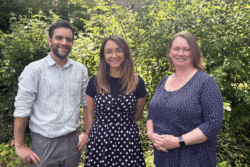
L to R: Dr Richard Harris, Dr Madeleine Pownall and Professor Pam Birtill
Dr Madeleine Pownall, Professor Pam Birtill, and Dr Richard Harris from the School of Psychology at the University of Leeds have been working in close collaboration since 2019. Their partnership began with a shared experience attending a teaching and learning conference in Utrecht. Inspired by the event, they returned to Leeds with a long to-do list filled with ideas to enhance and transform psychology education through innovation, research and a commitment to bringing their disciplinary expertise in psychology methodology to the study of pedagogical practice.
Together, they have developed a distinctive and influential body of work focused on embedding research-informed, inclusive and globally relevant practices into the undergraduate psychology curriculum. Their collaboration is grounded in a shared vision: to provide students with the skills, confidence and critical thinking necessary for academic success and future professional development as informed and thoughtful global citizens. Their work centres on fostering student belonging, addressing inequality and preparing students to engage as active global citizens.
One of their key achievements has been advocating for global citizenship and “psychological literacy” in the curriculum. Through a Leeds Institute of Teaching Excellence (LITE) fellowship and aligned projects, they have conducted a body of work which explores global citizenship education, publishing key findings on how to embed these principles into teaching and assessment. They have championed ‘psychological literacy’ in the BSc Psychology programme and beyond, which encourages students to apply psychological concepts to real-world challenges in creative and meaningful ways.
Following the challenges of the COVID-19 pandemic, the team turned their attention to supporting student transitions and fostering connectedness. They applied principles of care and inclusivity to ensure that students returning to in-person learning felt supported both academically and emotionally. Their teaching innovations have led to measurable improvements in retention and student satisfaction, particularly among underrepresented and disadvantaged student groups.
Beyond the curriculum, the team has led pioneering work on the hidden curriculum in higher education, which refers to the unspoken norms and expectations that often disadvantage certain student groups. In partnership with the Quality Assurance Agency (QAA), they developed and evaluated practical resources that empower students and guide staff to build more inclusive learning environments. Their student guide to the hidden curriculum has been widely praised for its clarity and impact and is now used across institutions to support equitable teaching practice.
In 2019, they co-founded the Research in the Psychology of Student Education (RitPoSE) Group to nurture pedagogical research across disciplines. Through RitPoSE, they have delivered workshops, mentored colleagues, supported grant applications and built a vibrant research culture that benefits both staff and students. The group was formally recognised with a nomination for the Positive Impact University Award.
Collectively, Dr Pownall, Professor Birtill, and Dr Harris have made a lasting contribution to psychology education, influencing institutional policy, shaping national conversations on student experience and ensuring that inclusive, thoughtful and evidence-based teaching is at the heart of everything they do. Their collaboration is built upon a shared vision for higher education, trust, established and flexible roles and compassion.
We’re delighted receive this award. It is such a meaningful recognition of the work we’ve done together. We strongly believe in the value of collaboration and peer working, not just as a way to share ideas, but as a way to make things possible that we simply couldn’t do alone.
Collaboration allows us to think more deeply, to challenge each other, and to stay grounded in what matters most for the student experience. We also believe that pedagogical practice must always be underpinned by careful, high-quality, collaborative scholarship.
Throughout our work, we have advocated for the need for evidence, student voice, and scholarship to underpin everything. Working together over the past 6 years has been both personally and professionally transformative, and this award reinforces the importance of making time, space, and recognition for meaningful, collaborative work in higher education.